The layout of your kitchen cabinets and appliances is one of the most important aspects of your design.
It directly impacts the amount of space you have for preparing and storing food, your workflow and the movement of traffic through your room.
Creating a practical and beautiful layout is crucial if you want your new kitchen to stand the test of time. However, since every home and household is unique, finding the perfect layout isn’t always easy.
Our professional designers will work closely with you to create a fantastic layout, using their years of experience to devise a unique solution that maximises your space and fits your lifestyle perfectly.
However, even though we tailor all our designs depending on your needs, most layouts are essentially based on six core types. So if you’re unsure where to begin planning your kitchen layout, these six designs are a great starting point.
galley kitchen
Named after the narrow kitchens found aboard a ship, galley kitchens were one of the first fitted kitchens ever invented and have remained popular ever since. They make incredibly efficient use of space, delivering on storage while helping you achieve the ideal work triangle.
The downside to galley kitchens is they can sometimes feel a bit cramped. Limiting overhead cabinetry to one side will help create a brighter, more open atmosphere. We added a small peninsula to the galley kitchen to give more the worktop and storage space while also creating a lovely informal seating area.
one-wall kitchen
One-wall kitchens are similar to galley kitchens. As their name suggests, they feature a run of cabinets along a single wall, including all your appliances, storage and worktops. Though you have to flatten the work triangle, one-wall kitchens can be highly functional. Their compact footprint makes them ideal for narrow rooms where there isn’t enough space for a galley kitchen with cabinets on either side. They also add great flexibility to open-plan living areas, allowing you to use the large proportion of remaining space to arrange your dining and living furniture.
The main downside to one-wall kitchens is their size. However, this is ultimately dictated by the size of your room, so if you have enough space, you may want to introduce a kitchen island to mitigate this.
island kitchen
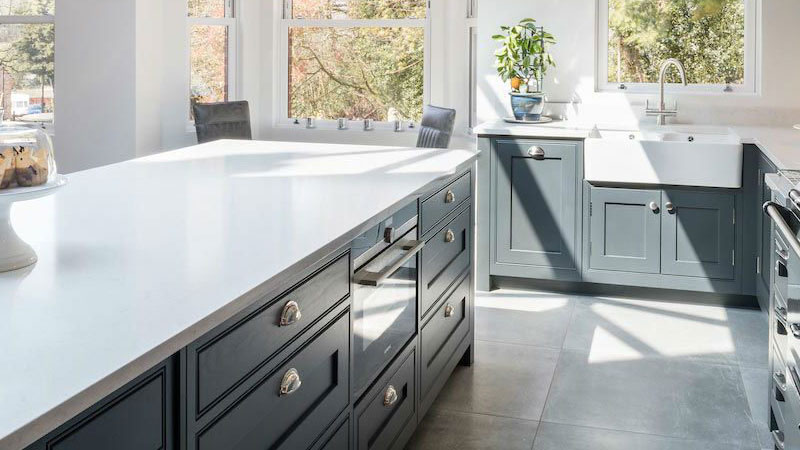
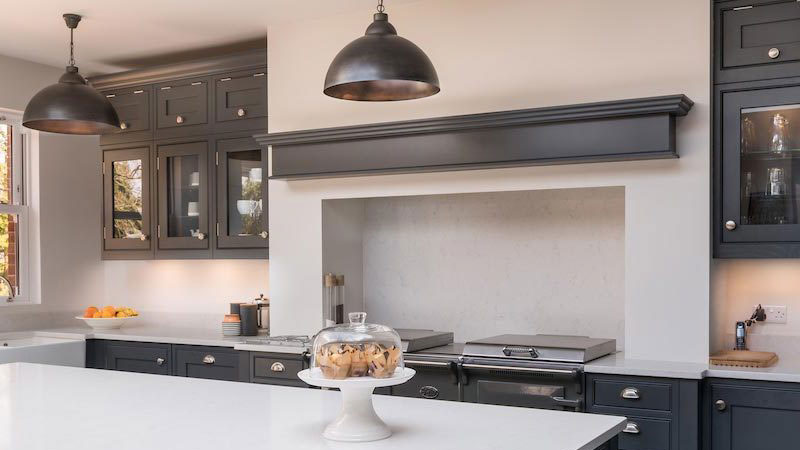
While a standalone island often forms the basis of a stylish and eye-catching kitchen, they are more commonly paired with the other layouts mentioned in this blog. This island kitchen offers a sophisticated addition to our client’s breathtaking contemporary home, incorporating all the appliances and counter space they need to cook.
However, storage is a bit limited. Pairing an island with a one-wall or L-shaped layout is a great way to achieve an ergonomic work triangle while making the most of your available storage and worktop space. A kitchen island’s other strength is it establishes a fantastic social focal point, ideal for busy families and those who enjoy entertaining.
L-shaped kitchen
Open, spacious and highly flexible, L-shaped kitchen layouts are excellent for small and large rooms alike. They can be paired with an island to minimise traffic and increase storage, or left open to accommodate multiple chefs and establish an airy feel.
L-shaped kitchens make it easy to create separate zones. For example, putting your fridge and sink on one side allows your family to prepare drinks without getting in the way of the cooking. L-shaped layouts work well in both open-plan and traditional spaces.
U-shaped kitchen
With their three continuous runs of cabinetry, U-shaped kitchens offer plenty of workspace and storage. And with three adjacent worksurfaces available, you’ll have no trouble achieving the perfect work triangle. Their closed layout makes them ideal for those who prefer to keep their kitchen separate from their living space.
However, too much overhead cabinetry and a lack of floorspace can quickly make a u-shaped kitchen feel cramped. To bring a more open atmosphere to a u-shaped kitchen, consider using a peninsula as one of the runs.
peninsula kitchen
Much like kitchen islands, peninsulas are a great way to enhance storage and worktop space while bringing a social element to your design. As they protrude into the room at an angle to your wall units, they need far less space than a central island.
Peninsulas can help improve a compact one-wall or L-shaped kitchen, creating an extra area to dine, socialise or prepare food.
We hope our introduction to the six key types of kitchens has given you some great inspiration for your project. If you have any questions about how to make the most of your space, we recommend chatting to our design team. They’ll be able to advise on the best layout to suit your room and lifestyle.
Get in touch with our friendly, expert team by calling us today on 01502 711210. We look forward to hearing from you.
read more from our journal

LET’s TALK KITCHENS
get in touch
We’d love to hear from you! Send us a message using the form and someone will get back to you as soon as possible.